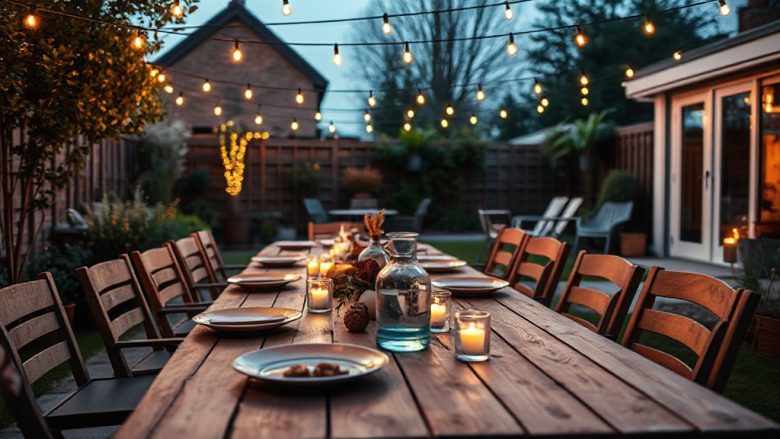
The best resources for learning backyard entertaining are not a single book or course. They are three things working together: practical checklists that keep you organised, visual inspiration that tells you what you actually like, and local advice from people who know your garden, your weather and your neighbours. If you have a patch of grass, a table and a free Saturday coming up, you can learn enough to host a relaxed gathering this weekend. This is a no-stress starting point for anyone who has never done it before.
The three resource types that matter most
Most people who feel stuck are not short of information. They are drowning in it. Pinterest boards with a thousand pins, recipe videos that run for twenty minutes, forum threads that argue about charcoal versus gas. The trick is to stop browsing and start using three specific kinds of resource, each for a different job.
Checklists and planning templates are the first type, and they are the least glamorous. A good checklist turns a vague worry into a list of small tasks. You want something that covers the boring essentials: how many chairs you need, whether you have enough plates, what time the sun leaves the patio, and where the bin bags are going. Search for terms like “backyard party checklist” or “outdoor gathering planning sheet” and you will find printable versions you can adapt. The real value is not the paper. It is the act of writing down what you own and what you still need. Do that once and you will never plan blind again.
Visual inspiration is the second type, and it is where most people spend all their time. Photos and short videos are genuinely useful for one thing: deciding on a mood. Do you want strings of warm bulbs over a long table, or a fire pit with mismatched chairs pulled into a circle? Do you want a bright daytime lunch or a slow evening with candles? Collect ten images that make you feel something, then look for the pattern. You are not copying anyone’s garden. You are finding your own default style so you can stop second-guessing every small decision.
Local advice is the third type and the one people skip. Your neighbour who hosts every summer, the person at the garden centre who knows what survives your winters, the butcher or baker who can tell you what feeds a crowd without fuss. Local knowledge answers the questions no generic guide can. How windy does your garden get in the evening? What time does the sun actually leave the lawn? Which insects will arrive the moment the food comes out? Fifteen minutes of conversation with someone who has done it in the same postcode is worth an hour of reading.
Use all three. A checklist without inspiration gives you a functional but joyless party. Inspiration without a checklist gives you a beautiful plan you cannot execute. Local advice ties the whole thing to your actual space. Together they cover setup, food and flow, which is really all a backyard gathering is.
A simple first-party plan
Here is the quick start. Pick a date about ten days out. Not next week, not next month. Ten days gives you enough time to prepare without letting the anxiety build.
Start with the guest list and keep it small. Six to ten people is the sweet spot for a first attempt. Small enough that you can seat everyone with what you already own, large enough that the conversation carries itself. Send a simple message with the date, the time and one line about what to expect. Something like “casual food in the garden, come as you are” removes the pressure for everyone, including you.
Next, walk your outdoor space at the time of day the party will happen. This is the single most useful thing you can do. If you are hosting at seven in the evening, stand outside at seven in the evening. Notice where the light falls, where the wind hits, where the ground is uneven, and which corner feels most comfortable. Move your table or seating into that comfortable corner. You do not need to redesign anything. You just need to put people where the space already works.
Then sort the three pillars: seating, shade and light. Seating means somewhere for every bottom, which can be a mix of proper chairs, benches, cushions on a blanket and a couple of upturned crates with a throw over them. Shade means an umbrella, a parasol, a stretch of wall or a tree, depending on the time of day. Light means whatever keeps the party going after sunset: string lights, lanterns, candles in jars, or a single bright lamp dragged outside. Get these three right and the party feels intentional even if nothing else is fancy.
Food is where first-timers overcomplicate things. Choose one thing that can be made ahead in a large quantity and one thing that people assemble themselves. A big tray of roasted vegetables, a pot of chilli, a giant salad, a board of bread and cheese. Add something cold to drink, something non-alcoholic that is not just water, and a dessert that needs no plating. That is a complete menu. Nobody remembers whether you made three sides or one. They remember whether they felt relaxed.
Flow is the quiet skill of hosting. It means thinking about how people move through the space. Put drinks where people naturally gather, not in the kitchen. Put food where there is room to stand with a plate. Keep a clear path to the bin and the bathroom. Have one obvious place to sit and one obvious place to put a glass down. When the layout answers those small questions, guests stop hovering and start settling in.
Finally, give yourself a cut-off. An hour before guests arrive, stop preparing and go and get ready. The host who is still chopping when the first person walks in sets a tense tone. The host who is sitting with a drink sets a relaxed one. The party mirrors you.
Where to find inspiration without overwhelm
Inspiration is useful until it becomes a trap. The trap looks like this: you open an app, save forty ideas, feel behind because your garden is not a magazine shoot, and close the app without doing anything. The fix is to give inspiration a job and a time limit.
Set twenty minutes. Search for outdoor table settings, garden lighting ideas, or small backyard gathering setups. Save only images that match your actual space. If you have a tiny courtyard, skip the images of rolling lawns. If you have a windy spot, skip the delicate candle arrangements. Inspiration that ignores your reality is just decoration.
Then stop and pick three things to copy. Not thirty. Three. Maybe it is the way a table is laid with a simple runner and one colour of flower. Maybe it is a cluster of lanterns on the ground. Maybe it is the idea of serving everything on one big board. Three achievable details will make your gathering feel styled. Thirty will make you feel like a failure before you have started.
Books are a better resource than most people expect. A good book on outdoor cooking or garden design gives you a framework rather than a scroll of disconnected images. Borrow one from the library, read the chapters that match your situation, and return it. You do not need a shelf of them. You need one that suits your climate and your style of hosting.
Podcasts and short videos work well for the parts that are hard to learn from photos, like how to keep food warm outdoors or how to arrange seating so conversation flows. Listen while you tidy the garden. Watch one video on the specific problem you have, not five on general hosting. The goal is to solve a problem, not to consume content.
And remember that the best inspiration is often right next door. Ask a friend who hosts well what they do. Ask what they wish they had known the first time. Ask what they always forget. Their answers will be more useful than any perfectly lit photograph, because they come with context, mistakes and shortcuts.
When the day comes, the only thing that really matters is that you invited people. The chairs do not have to match. The food does not have to impress. The lights can be a single string draped over a fence. What guests remember is being welcomed into a space where someone was glad to see them. Everything in this article is in service of that one feeling. So pick a date, send the message, and let the garden do the rest.